THE VJAOA WINE RATING SYSTEM was created to so that the rating could be scanned very quickly to get a three-dimensional view of the wine. Welcome to a wine rating that conveys the rating through data visualization. This data visualization can stand on its own or it can be displayed with the wines, both online and within retail, to convey an enormous amount of information.
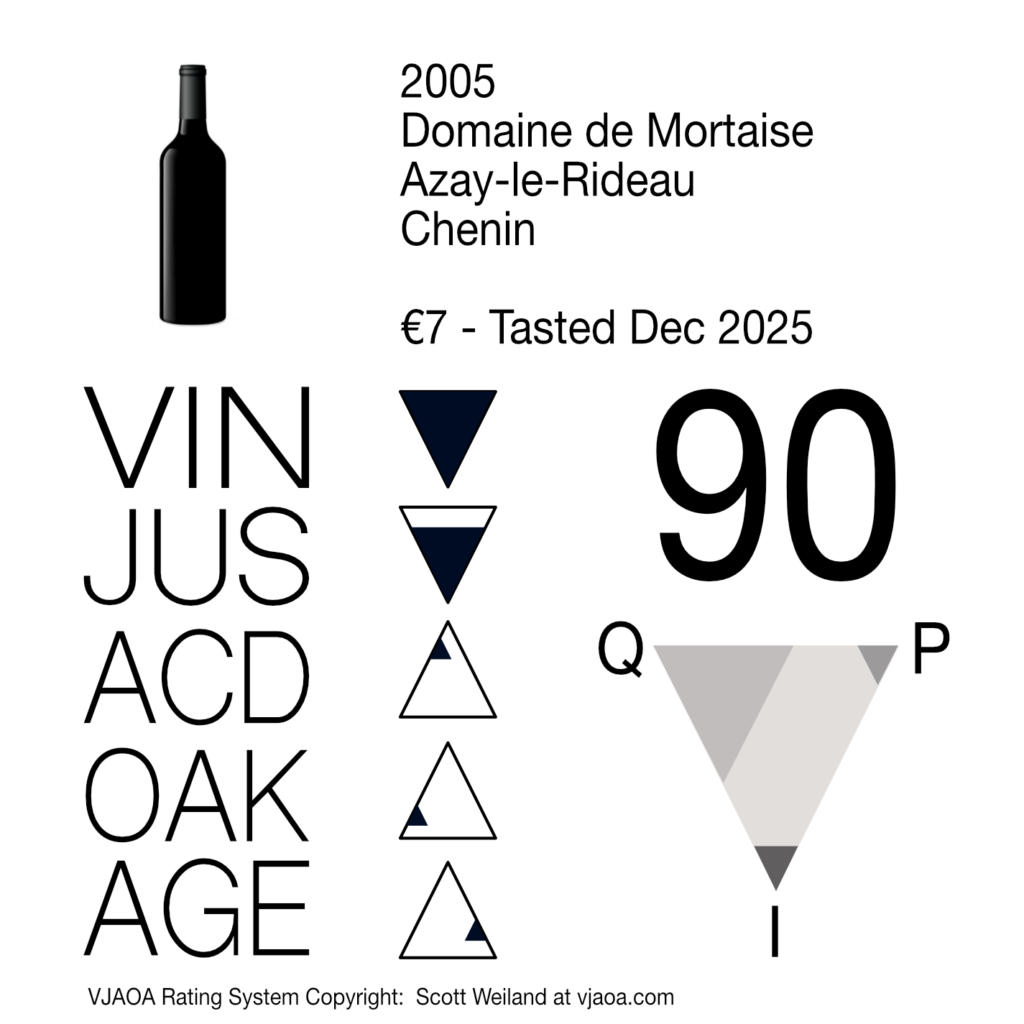
Wine tasting notes can, of course, accompany this visual rating as needed. The addition of the (JUS) rating, which rates the job of the winemaker from the moment of harvest, through fermentation and into the initial aging of the wine, is completely new. (For a deeper dive into why this new rating was developed – read Why (JUS) matters.) The VJAOA rating system gives an indication of flavor, age-worthy factors, quality to price ratio and even potential investment value – all without tasting notes, which are often very subjective and often very repetitive (if you have had a Haut Medoc, you know the general flavor profile already).
Most rating systems that show factors across a spectrum or scale focus on either flavors or just a numerical value. This new approach disrupts the norm within the “wine world” by proposing robust visual wine ratings and, in some cases, removes the need for poetic/subjective tasting notes.
RATING WINES
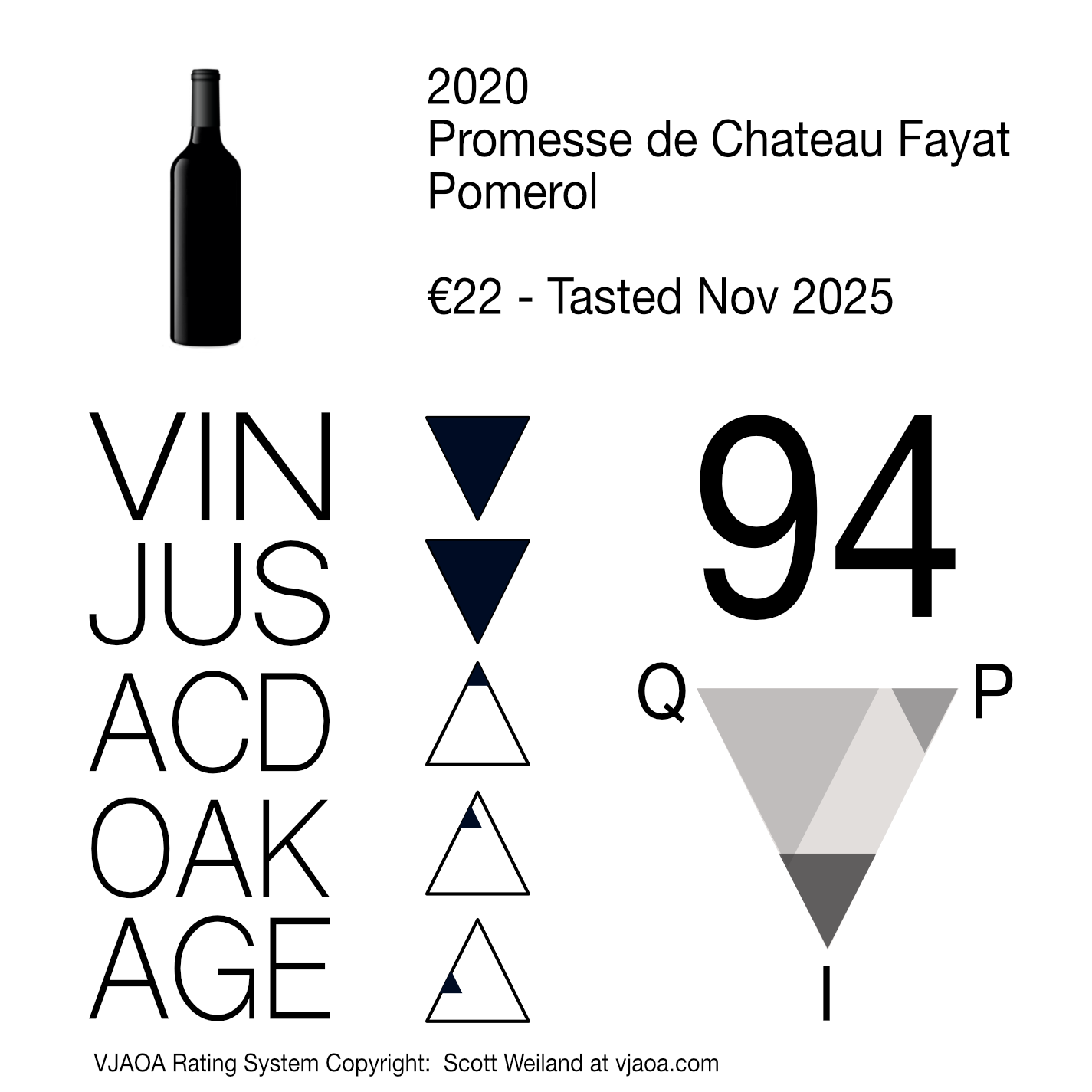
There are five factors (VJAOA) used to evaluate the wine that you are tasting. They are ranked in order of importance and in the order that they matter to wine fans, collectors (and the winemakers themselves). Ideally, this would be a simple mobile app where wine professionals could easily rate wines, wine in one hand, rating in the other.
VIN – The vintage is of course the most important part because great wine starts in the vineyard. Without a great growing season, you cannot have great wine. It’s as simple as that. Good wine can of course can come from classic growing seasons, but never the best.
RATING SCALE: Poor, Below Average, Good, Very Good, Excellent
This triangle is like a wine glass: an empty glass indicates lacking excellence and a glass full mark means this factor is excellent.
JUS – Once the grapes have spent time in the vineyard, the winemaker is confronted with when to pick the grapes and that effects the quality of the juice. Vintages where budding and flowering happen early, as well as vintages where heat comes late in the season, will make decisions about the vendange importatnt for the winemaker. How much exposure to stems, skins and the like should they include?Other practices effecting (JUS) are things like: winemakers that use aggressive pump-over methods, winemakers who only use gravity for extraction, etc. All of this goes into whether the winemaking process starts with the best juice possible. This rating comes before acidity in order of importance and requires that the wine rating is done by someone that knows a bit about the winemaker. Likewise, winemakers that harvest early for freshness when they see a heat wave coming late in the season will render very different wines than their peers. The simplest way to understand one aspect of this factor (JUS) is to taste several Burgundies from the same area and year, and from a very hot harvest season. Some wines will taste fresh, some will taste cooked.
RATING SCALE: Poor, Below Average, Good, Very Good, Excellent
This triangle is like a wine glass: an empty glass indicates lacking excellence and a glass full mark means this factor is excellent.
ACD – All great wines are balanced and acidity plays a role. This factor comes from the vintage partially and also from when the vendage takes place. Harvesting too late during a hot vintage can ruin your chances of having good acidity. Great wines age well when there is enough acidity to keep the wine fresh over time. If the vendage takes place too early, acidity can be too high and if it takes place too late or the vintage is too hot, the acidity can be too low.
RATING SCALE: Very Low, Low, Some acidity, Average, High, Very high, Super high
A mark on the triangle on the left rates this factor (ACD) as lower acidity. A mark at the top of the triangle means it is average for a wine like this and generally balanced. Marks on the right side of the triangle rate this factor as beginning to be too acidic. Generally wines will need to rate on the upper portion of the triangle. Wines that aim to be cellared by collectors may create wines with slightly higher acidity, knowing that this age-worthy wine will need it for the long, aging process. For (ACD), the rating is always in contrast with other factors and flavors.
OAK – All great wines that use oak are exposed to it in the proper amount. There are many great wines that have no oak at all and that is ok. But some winemakers over-do the oak in search of longevity that the fruit cannot support or oak is used to give mediocre wines aromatic notes while ruining the wine.
RATING SCALE: Very Low, Low, Some acidity, Average, High, Very high, Super high
A mark on the triangle on the left rates this factor (OAK) as lower oak presence. A mark at the top of the triangle means it is average for a wine like this and generally balanced. Marks on the right side of the triangle rate this factor as beginning to be too oaky. Generally wines will need to rate on the upper portion of the triangle. However, there are many good wines that are un-oaked. Wines that aim to be cellared by collectors may create wines with slightly higher oak, knowing that this age-worthy wine will need it for the long, aging process. For (OAK), the rating is always in contrast with other factors and flavors.
AGE – This factor is giving the wine a rating based on its current age at the time of the tasting. The question is whether the wine is peaking or past its peak. Most wines are not meant for aging and therefore are at their peak young. There are some wines we taste that have been in the cellar and are nearing their peak or are past peak. All wine lovers that age wine will want to know if a wine they have the ability to acquire is going to mature further, or is past its prime.
RATING SCALE: Young, Starting to age, Peaking, Starting to fade, Fading fast
A mark on the triangle on the left rates this factor (AGE) as before its prime. A mark at the top of the triangle means it is peaking as far as (AGE). Marks on the right side of the triangle rate this factor as starting to fade and the farthest right means the wine may be past its drinking window completely.
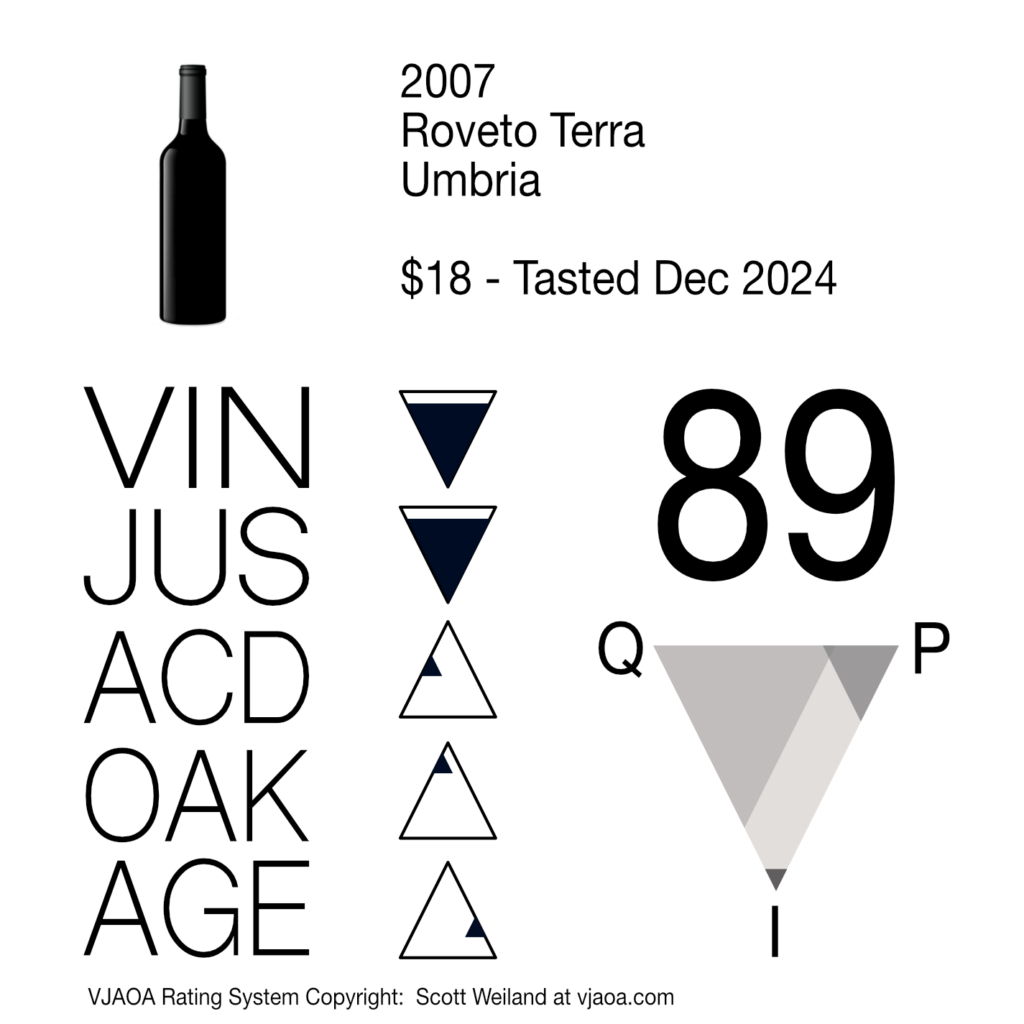
THE QPI DIAGRAM – (QUALITY – PRICE – IMPROVEMENT / INVESTMENT)
This info-graphic shows the relative quality to price ratio and includes a new factor related to the Improvability / Investworthy nature of the wine. This visual graphic conveys an enormous amount of information in one glance. Collectible wines will often fill the graphic while mediocre wines will not. This example above, shows enormous value to price but it is fading. However, many people like this nearly faded quality in aged wine. So it’s a buy now/drink now value.

Visit our homepage at VJAOA
See also:
The Wine Scholar Guild is also a dependable, basic resource for learning about vintages in wine regions around the world.